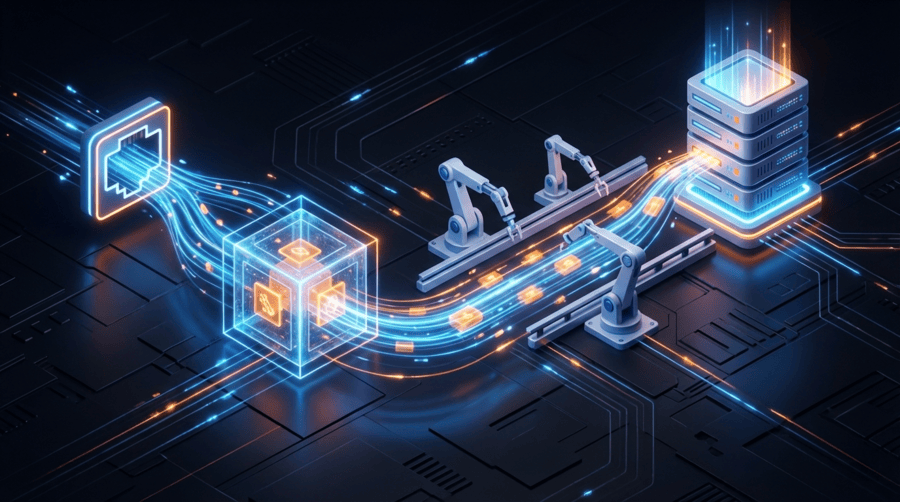
What Are Bare Metal Provisioning Workflows for Enterprise?
In enterprise environments, infrastructure instability rarely originates from catastrophic hardware failure. It emerges from inconsistency. A firmware revision that differs between nodes. A RAID controller configured manually under time pressure. A kernel module present on one server but absent on another. At scale, these inconsistencies create operational drag, compliance exposure, and unpredictable performance behavior.
This is where structured bare metal provisioning workflows become foundational to enterprise infrastructure automation. The objective is not simply deploying servers faster. It is building a deterministic, repeatable, and governed system for managing physical infrastructure across its entire lifecycle.
Understanding Enterprise Bare Metal Provisioning in Modern Infrastructure
Enterprise bare metal provisioning refers to the automated orchestration of physical server deployment from hardware discovery through operating system installation, configuration enforcement, cluster integration, and long term lifecycle governance.
Unlike virtualized environments where a hypervisor abstracts hardware resources, bare metal interacts directly with firmware, storage controllers, network interfaces, and out of band management interfaces such as IPMI and Redfish. This direct hardware access removes virtualization overhead and improves performance determinism. It also increases the importance of disciplined automation.
In environments supporting Kubernetes clusters, OpenStack private clouds, VMware migrations, AI training workloads, edge computing nodes, and high throughput databases, direct hardware control is often required. Isolation, compliance, and predictable latency cannot rely solely on shared multi tenant platforms.
A mature bare metal deployment process typically progresses through layered phases: discovery, provisioning, configuration, orchestration, and lifecycle management. When these phases are automated cohesively, physical infrastructure behaves with the operational clarity of cloud resources.
Discovery Before Deployment
Effective automated server provisioning begins with visibility.
Before installing any operating system, enterprises boot a lightweight discovery image using PXE or iPXE network boot. During this phase, hardware attributes are validated, including CPU topology, NUMA alignment, memory configuration, NVMe enumeration, RAID settings, and network interface mapping.
Discovery allows administrators to enforce firmware baselines, validate BIOS policies, and correct storage configurations before committing to a production build. In AI or high performance computing environments where GPU allocation and PCIe lane distribution matter, early validation prevents architectural drift that could compromise performance.
By separating hardware validation from OS installation, enterprises reduce post deployment surprises and strengthen compliance integrity.
Network Boot and Operating System Imaging at Scale
Once hardware compliance is confirmed, the provisioning phase begins. DHCP directs the server to a network boot source, loading a minimal environment that installs the designated operating system image.
In enterprise bare metal provisioning, images are rarely generic. Hardened Linux builds aligned with CIS benchmarks, container optimized distributions for Kubernetes nodes, Windows Server installations for enterprise workloads, or custom tuned kernels for low latency applications are deployed based on workload intent.
The core principle is reproducibility. Every node in a cluster must be built identically. Configuration drift is one of the most common causes of operational instability in physical infrastructure.
Modern enterprise infrastructure automation frameworks integrate Infrastructure as Code tools such as Terraform or Pulumi, enabling hardware to be defined declaratively. IP assignments, VLAN segmentation, storage allocation, and cluster membership become version controlled artifacts rather than manual configuration tasks.
Configuration Governance and Cluster Integration
Operating system installation marks the midpoint, not the conclusion.
Post provisioning workflows enforce BIOS settings through Redfish APIs, configure bonded networking and VLAN tagging, optimize storage for distributed systems such as Ceph or object storage clusters, and enroll nodes into orchestration platforms such as Kubernetes, OpenShift, or VMware environments.
Configuration management systems including Ansible, Puppet, and Chef maintain baseline state. Monitoring platforms such as Prometheus and Grafana ensure visibility. Logging pipelines feed into centralized observability systems.
Servers are not managed individually. They are treated as pools, clusters, or resource groups. When hardware health thresholds are breached or compliance drift is detected, automated remediation pipelines can reimage, quarantine, or replace nodes without manual intervention.
This is where bare metal provisioning workflows evolve into full enterprise infrastructure automation.
Lifecycle Automation and Operational Resilience
Physical infrastructure does not remain static. Firmware updates, security patches, scaling events, and hardware refresh cycles must be orchestrated predictably.
Lifecycle management includes automated patch enforcement, BIOS and firmware standardization, secure disk wipe procedures during decommissioning, and cluster aware maintenance scheduling. Autonomic monitoring systems detect configuration drift or hardware anomalies and trigger corrective workflows.
In distributed environments running AI training jobs, financial transaction platforms, or high availability microservices, predictable lifecycle automation reduces maintenance windows and prevents cascading service disruptions.
Servers become programmable resources. Reset, rebuild, and redeploy actions are initiated through APIs rather than manual touchpoints.
Security and Compliance Alignment
Bare metal environments provide physical isolation that simplifies adherence to compliance standards such as PCI DSS, HIPAA, and ISO 27001. However, isolation alone does not ensure compliance. Automation must enforce consistent security posture.
Provisioning pipelines embed secure boot validation, encrypted disk initialization, identity integration, role based access controls, and continuous patch compliance. Automated enforcement minimizes human configuration error, which remains a primary source of regulatory exposure.
When governance is embedded into the bare metal deployment process itself, audit readiness improves substantially.
Performance Determinism and Architectural Alignment
One of the principal reasons enterprises adopt bare metal provisioning workflows is performance determinism. Eliminating the hypervisor layer preserves CPU cycles, memory bandwidth, NVMe throughput, and GPU efficiency. For AI inference, distributed SQL databases, real time analytics, or edge computing, this direct hardware access translates into measurable latency and throughput improvements.
However, automation effectiveness depends on infrastructure architecture. PCIe lane allocation, NUMA topology, memory channel configuration, and network backbone design all influence provisioning stability and workload consistency.
Automation cannot compensate for poorly balanced hardware. It amplifies architectural clarity.
Dataplugs and Enterprise Bare Metal Provisioning
For enterprises implementing advanced bare metal provisioning workflows, infrastructure reliability is inseparable from automation reliability.
Dataplugs delivers dedicated server environments engineered for performance stability and architectural balance. Enterprise grade processors, optimized NVMe storage configurations, and high capacity network connectivity provide a consistent foundation for automated server provisioning and cluster orchestration frameworks.
In latency sensitive deployments or cross border connectivity scenarios, network positioning becomes critical. Dataplugs’ infrastructure footprint and backbone optimization support deterministic performance across distributed environments, enabling enterprise infrastructure automation to operate without hidden bandwidth constraints.
When hardware topology is consistent and network performance is predictable, PXE based imaging, Infrastructure as Code workflows, and cluster integration pipelines execute with minimal variance. This alignment between hardware design and automation strategy strengthens lifecycle governance and scalability.
Conclusion
Bare metal provisioning workflows in enterprise environments extend far beyond installing operating systems. They define a structured, automated approach to deploying, configuring, governing, and maintaining physical infrastructure at scale.
By integrating discovery validation, PXE driven imaging, configuration enforcement, Infrastructure as Code, and continuous lifecycle monitoring, enterprises transform hardware into programmable, resilient assets. The outcome is improved deployment velocity, stronger compliance posture, predictable performance, and operational confidence across mission critical workloads.
Organizations evaluating dedicated infrastructure aligned with advanced automation strategies can connect with the Dataplugs team via live chat or at sales@dataplugs.com to explore configurations designed for long term performance stability and scalable growth.