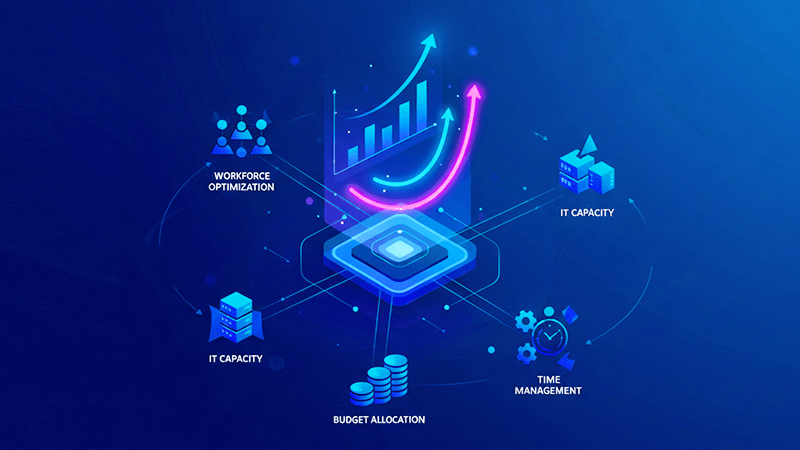
Proactive Resource Allocation: Predictive Analytics on Metrics
Resource allocation challenges in high-growth digital environments are rarely straightforward. IT leaders and business operators today face a constant struggle: how to ensure critical applications and services remain responsive and resilient, even as demands shift unpredictably and infrastructure becomes more distributed. Stagnant allocation models—relying on static thresholds or simple historical averages—often leave organizations exposed to system slowdowns, customer dissatisfaction, and operational inefficiencies. As user expectations intensify and regulatory requirements grow more stringent, the margin for error shrinks. Over-provisioning resources leads to wasted investment, while under-provisioning can result in missed opportunities, revenue loss, or reputational damage. To address these realities, enterprises are turning to proactive resource allocation strategies, leveraging predictive analytics on real-time metrics to stay ahead of emerging needs and risks.
Evolving from Reactive to Predictive Resource Planning
In the past, organizations addressed resource allocation primarily through reactive measures. Teams would respond to bottlenecks or outages after they occurred, often racing to manually provision extra servers, reassign staff, or troubleshoot overloaded systems. This mode of operation, while serviceable in simpler environments, quickly becomes unsustainable as infrastructure scales and business models move toward always-on availability.
Proactive resource allocation built on predictive analytics fundamentally changes this paradigm. Instead of reacting to yesterday’s incidents, organizations can anticipate tomorrow’s demands. By continuously monitoring granular operational metrics—ranging from CPU usage and network throughput to customer interaction volumes and support ticket patterns—businesses gain the foresight needed to optimize resource allocation in real time.
This shift is not simply about forecasting; it’s about embedding intelligence and adaptability into every layer of operations. Predictive analytics utilizes statistical modeling, machine learning, and data mining to uncover trends, correlations, and potential system constraints before they manifest as problems. This capability is especially critical for businesses operating in industries such as ecommerce, financial services, SaaS, and content delivery, where peaks can be sudden, and downtime is unacceptable.
The Core of Data-Driven Resource Allocation
At the heart of predictive analytics for resource planning is the ability to synthesize diverse data streams into actionable insights. Modern enterprises are awash with data—from infrastructure telemetry and application logs to user behavior analytics and customer feedback. The challenge lies in transforming this raw information into a coherent set of resource allocation metrics that accurately reflect both current performance and future requirements.
Common metrics include:
- Real-time infrastructure utilization (e.g., CPU, RAM, disk I/O)
- Application response times, throughput, and error rates
- Network capacity and latency trends
- Customer engagement metrics, such as active session counts and transaction rates
- Support demand indicators (e.g., ticket volume, escalation frequency)
Predictive analytics models integrate these metrics with external data, such as marketing campaigns, seasonal patterns, or regulatory deadlines, creating a full picture of the operational landscape. Machine learning algorithms—ranging from regression models to neural networks—identify subtle shifts and emerging risks, allowing for more precise resource planning than traditional static models.
Implementing Predictive Analytics for Resource Planning
Deploying predictive analytics in resource planning is a multi-stage process that demands a blend of technical expertise, process maturity, and cultural alignment. The journey often begins with data integration—capturing and consolidating key metrics from across the organization. With a unified dataset, teams can develop and train predictive models, validate their accuracy, and integrate them into operational workflows.
Automation is a critical enabler at this stage. By automating data collection, analysis, and response workflows, organizations can ensure that resource allocation keeps pace with real-time changes. For example, predictive models might trigger the auto-scaling of cloud resources when a traffic surge is detected, or proactively schedule additional support staff in anticipation of a product launch.
Continuous improvement is also essential. Predictive models must be regularly updated with new data and retrained to reflect changing conditions. Feedback loops—incorporating outcomes from past predictions—help refine model accuracy and maintain relevance as business strategies evolve.
Beyond Infrastructure: Predictive Resource Allocation in Business Operations
While predictive analytics is often associated with IT and infrastructure, its impact extends far into business operations. For example, in customer experience (CX) management, predictive models can forecast support demand based on marketing activities, product updates, or seasonal cycles. This enables organizations to align staff schedules, ensure adequate coverage during peak periods, and proactively address emerging issues—improving both efficiency and customer satisfaction.
In project management, predictive analytics supports capacity planning by analyzing past project data, resource utilization rates, and risk factors. This allows project leaders to identify potential bottlenecks, adjust timelines, and allocate resources more effectively, ultimately increasing the likelihood of on-time and on-budget delivery.
Supply chain and logistics operations also benefit. Predictive models can analyze demand fluctuations, inventory turnover, and transportation patterns, ensuring that resources—whether they be personnel, vehicles, or materials—are positioned optimally to meet service levels.
Dataplugs: Building the Foundation for Predictive Resource Allocation
The ability to operationalize predictive resource allocation depends on a high-availability, flexible infrastructure that can scale and adapt as analytics-driven insights dictate. Dataplugs delivers dedicated server and cloud solutions designed to support even the most demanding data-driven environments. With data centers in Hong Kong, Tokyo, and Los Angeles, clients benefit from low-latency global connectivity, robust security, and direct access to Tier-1 networks.
Dataplugs infrastructure is tailored for seamless integration with advanced monitoring, automation, and analytics platforms. Whether organizations are managing seasonal ecommerce surges, supporting global SaaS platforms, or streamlining financial operations, Dataplugs provides the reliability and scalability needed for continuous, predictive resource management. Around-the-clock technical support ensures that clients can implement, monitor, and refine their strategies as their business requirements evolve.
Key Success Factors and Best Practices
Successfully embedding predictive analytics into resource allocation requires a strategic approach:
- Develop a unified metrics framework that bridges IT, business, and customer-facing teams
- Invest in automation and integration with existing monitoring, analytics, and workflow tools
- Foster a culture of continuous learning, regularly reviewing outcomes and updating models
- Align predictive insights with broader operational and business objectives, ensuring resource investments drive measurable impact
Organizations should also prioritize transparency and explainability in their predictive models. Stakeholders need to understand not just what the models are predicting, but why—building trust and facilitating adoption across teams.
Conclusion
Proactive resource allocation, powered by predictive analytics on metrics, is reshaping the operational landscape for modern enterprises. By moving beyond reactive, manual approaches and embracing data-driven, automated planning, businesses can anticipate demand, optimize their resource investments, and deliver superior performance and customer experiences. With the right infrastructure partner—such as Dataplugs—organizations gain the foundation needed to unlock the full potential of predictive analytics, positioning themselves for agility and success in an ever-evolving market. To explore how Dataplugs can support your predictive resource allocation initiatives, connect with the team via live chat or email sales@dataplugs.com.