What Causes Packet Fragmentation Issues on High MTU Networks?
High bandwidth networks can still behave unpredictably when packet sizes exceed what certain links along the path can handle. In many infrastructures the real issue is not speed but packet fragmentation caused by MTU configuration issues between different network segments.
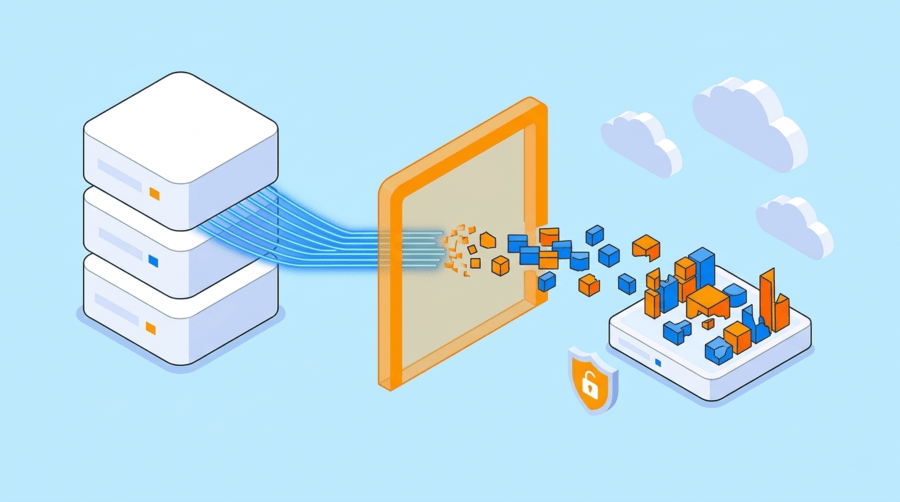
When packets are larger than the MTU allowed by a downstream interface, routers must fragment them or drop them entirely. This commonly occurs in networks using tunnels, overlays, or VPNs where effective packet size limits are smaller than expected.
Understanding what causes packet fragmentation and how MTU mismatch network conditions develop helps maintain stable connectivity and predictable data transfers.
Understanding MTU and Why Packet Size Matters
The Maximum Transmission Unit defines the largest packet size that can travel across a network link without fragmentation. On most Ethernet networks, the standard MTU is 1500 bytes.
Within that limit, part of the packet is used by protocol headers such as TCP and IP. The remaining space carries application data.
If a packet encounters a network segment with a smaller MTU, the device must fragment the packet or discard it. Frequent fragmentation increases overhead and slows down data transmission.
Note: Large transfers across international routes may experience throughput limits if the TCP window size is smaller than the bandwidth delay product of the connection.
Common Causes of Packet Fragmentation Issues
Fragmentation typically appears when different parts of a network support different MTU values. The situations below are among the most common triggers.
MTU mismatch between network segments
A server may transmit packets sized for a 1500 byte network while a VPN or tunnel path supports smaller packets. This MTU mismatch network condition forces routers to fragment packets before forwarding them.
Encapsulation overhead from tunnels or overlays
Technologies such as VXLAN, GRE, or IPsec add extra headers to packets. This overhead increases total packet size and can push traffic beyond the MTU of the physical interface.
Overlay networking in container environments
Platforms such as Kubernetes often rely on overlay networks to connect nodes. These overlays reduce the effective MTU available to applications.
VPN encryption overhead
Encrypted tunnels frequently reduce usable MTU values to around 1400 bytes. If internal systems continue sending 1500 byte packets, fragmentation occurs inside the tunnel.
Blocked ICMP messages
Path MTU discovery relies on ICMP feedback when packets exceed the allowed size. If firewalls block these messages, senders never learn the correct packet size.
How Path MTU Discovery Problems Create Hidden Failures
Path MTU discovery automatically identifies the smallest packet size supported along a network route. When a packet exceeds the MTU of a device, that device should notify the sender so it can reduce packet size.
If ICMP messages are filtered or ignored, the sender continues transmitting oversized packets.
This often results in behaviors such as stalled file transfers, unstable remote sessions, or large uploads failing while smaller requests succeed.
Fragmentation and Its Impact on Performance
Fragmentation increases processing overhead because packets must be split and later reassembled. If one fragment is lost, the entire packet must be retransmitted.
This increases latency and reduces effective throughput.
IPv6 networks are stricter because routers do not fragment packets during transit. Oversized packets are simply dropped, which makes correct MTU configuration even more important.
Network Packet Fragmentation Troubleshooting
Diagnosing fragmentation begins by identifying the largest packet size supported along a route.
Administrators often test this using ping with the do not fragment option to find the maximum packet size that succeeds. Tools such as tracepath can also reveal the path MTU automatically.
When troubleshooting MTU configuration issues, engineers usually verify:
Interface MTU values
Tunnel or VPN MTU settings
Overlay network configurations
Firewall rules affecting ICMP traffic
Correcting these mismatches typically resolves most fragmentation related problems.
Tip: Stable routing paths and strong upstream connectivity are important for services that move large amounts of data across regions.
How to Fix Packet Fragmentation
Several adjustments can prevent fragmentation in modern networks.
Align MTU values across network segments
Ensure connected interfaces support compatible packet sizes.
Reduce MTU for encapsulated networks
Lower the internal MTU when using overlays or encrypted tunnels.
Allow path MTU discovery
Permit ICMP responses so devices can automatically adjust packet size.
Adjust TCP MSS when needed
Routers can limit the TCP maximum segment size during connection negotiation to prevent oversized packets.
These steps help packets move across the network without fragmentation.
Infrastructure Planning for Large Data Transfers
Applications transferring large files or serving global users are especially sensitive to MTU mismatch network conditions. Stable routing and consistent packet handling become critical for maintaining performance.
Infrastructure located near major internet exchange points often benefits from improved routing efficiency and reduced packet loss.
Tip: Businesses serving users across Asia Pacific or distributing content internationally often benefit from dedicated servers located near major internet hubs with strong upstream connectivity. This reduces routing inefficiencies and improves consistency for long distance transfers.
Providers such as Dataplugs operate infrastructure in key connectivity hubs with high bandwidth capacity and multiple upstream carriers. This type of environment supports reliable data movement for bandwidth intensive workloads.
Frequently Asked Questions
What causes packet fragmentation most often
Packet fragmentation typically occurs when packets exceed the MTU of a network segment due to MTU mismatch or encapsulation overhead.
How do path MTU discovery problems affect networks
If ICMP feedback is blocked, senders continue transmitting oversized packets which leads to repeated fragmentation or packet loss.
Can fragmentation reduce network speed
Yes. Fragmentation increases processing overhead and retransmissions, reducing throughput.
Why do VPN networks often require smaller MTU values
VPN tunnels add encryption headers, increasing packet size and reducing the available MTU for payload data.
Conclusion
Packet fragmentation issues often originate from MTU configuration inconsistencies across layered network environments. When packets exceed the limits supported by intermediate devices, fragmentation or packet loss occurs.
By identifying MTU mismatch conditions and ensuring path MTU discovery works properly, organizations can improve network stability and data transfer performance.
For workloads involving large scale transfers or global connectivity, infrastructure design also plays an important role. If you are exploring high bandwidth dedicated server environments with strong regional connectivity, connect with the Dataplugs team via live chat or at sales@dataplugs.com.